
Canada: Understanding Today’s Information Landscape
Analysis of key highlights and contemporary issues
How to decipher today’s information flows?
The constant flow of information requires us to interpret the events that shape our daily lives with insight. This means distinguishing the signal from the noise by identifying the driving forces behind the headlines. Rigorous analysis of the facts, placing them in context, and understanding the underlying issues help build a nuanced and comprehensive view of reality, far removed from simplistic assertions.
01
Rigorous fact-checking

02
Putting raw information into context

03
Cross-checking multiple sources

04
Analyzing underlying trends

05
Distinguishing Between Facts and Opinions

The Importance of Journalistic Ethics
These pillars ensure high-quality information.



Principles of Information Processing
A structured and critical approach
The canadian economy: between tradition and innovation
The national economy is characterized by the duality between its traditional sectors—notably natural resources—and the rapid growth of technology and financial hubs. The Bank of Canada’s monetary policies and international trade agreements provide the framework for this gradual transformation.
Which sectors are undergoing major transformation?

The natural resources sector
The financial services hub
The innovative SME ecosystem

New emerging business models

Structural challenges to address
Innovation: a growth driver for Canadian businesses
From agile start-ups to large corporations
Investment in research and development
A Driver of Sustainable Growth
Montreal, Toronto, Waterloo: Hubs of excellence in innovation
Supported by the hubs of excellence in Montreal, Toronto, and Waterloo, the country is positioning itself in promising growth sectors. Artificial intelligence, biotechnology, and clean technologies are attracting significant investment, fostering the development of solutions to global challenges while boosting local competitiveness and creating skilled jobs.

Applied artificial intelligence

Clean and sustainable technologies

Advances in biotechnology

Critical infrastructure cybersecurity

Future connectivity and networks

Digital transformation of retail




An ever-evolving mosaic
Multiculturalism and reconciliation: social dynamics in Canada
Canada’s social fabric is deeply shaped by its official multiculturalism and the challenges of reconciliation with Indigenous peoples. These social dynamics influence artistic expression, public policy, and the debates that drive civil society from coast to coast.


Passing on cultural heritage
Contemporary artistic expressions
Physical and mental health
Universal health care system: challenges and a holistic approach
The universal health care system faces major challenges, such as an aging population and disparities in access to care between urban and rural areas. At the same time, there is a growing focus on prevention, lifestyle, and mental health, marking a paradigm shift toward a more holistic approach.
Telemedicine and digital tools: Rethinking access to care
Significant logistical challenges
The tension between the growing demand for services and the capacity of existing infrastructure is forcing a rethinking of delivery models. Telemedicine and digital tools for patient monitoring are emerging as solutions to relieve congestion in healthcare centers.
Destigmatization and access to mental health services
Collective awareness
Destigmatization initiatives are on the rise, spurred by national awareness campaigns. This is leading to increased demand for accessible psychological services and better integration of this care into the patient’s overall healthcare journey.
Public health programs: Preventing chronic diseases
Act early to prevent disease
The focus is on educating the public about nutrition, physical activity, and stress management. Public health programs aim to reduce the incidence of chronic diseases by encouraging lifestyle choices that promote long-term well-being.

Conscious consumption: Values and environmental impact
Toward more conscious consumer choices
Shopping behaviours: origin, ethics and traceability
Consumers are increasingly turning to choices that reflect their values. A product’s origin, its environmental impact, and its manufacturing conditions are becoming decision-making criteria just as important as price, thereby reshaping the retail landscape.
A world in flux
Convergence Points of Current Major Themes
Beyond their specific characteristics, these various current issues intersect and influence one another. The ecological transition imposes economic constraints, while digitization is transforming society and culture. Understanding these interactions is essential to grasping the complexity of the contemporary challenges facing the country as a whole.
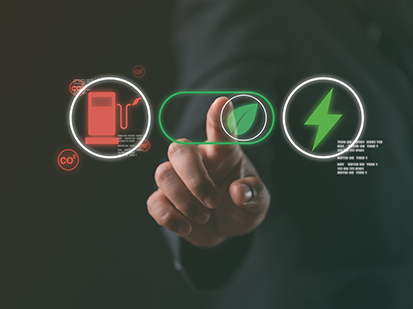
How the ecological transition guides policies

Digitization: Transforming Services and Culture