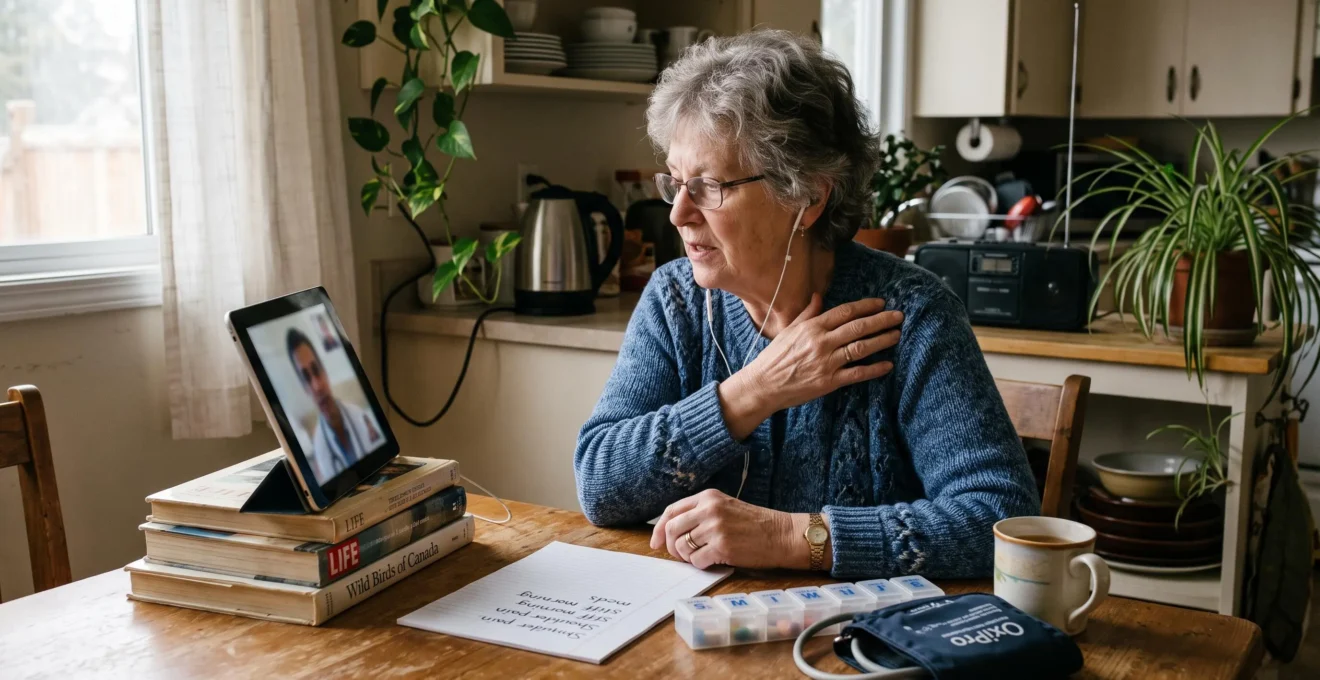
Telemedicine can facilitate access to healthcare when a practitioner is able to assess a condition without physically examining the patient. It allows individuals to obtain medical advice, manage a chronic disease, discuss treatment options, or be directed to appropriate resources without having to travel for an in-person visit.
In Canada, this option is particularly valuable for people living in remote regions, those with limited mobility, or patients facing long wait times for appointments. However, a remote consultation is not always sufficient: certain symptoms require auscultation, palpation, laboratory testing, or immediate intervention.
The real challenge lies in choosing the consultation channel best suited to the clinical situation. Between telephone, video, walk-in clinics, community pharmacies, and emergency rooms, each option addresses distinct healthcare needs. The operation and public insurance coverage of these services also vary across provinces and participating healthcare providers.
Telemedicine in Canada: Key Takeaways
- Virtual care is best suited for ongoing follow-up of known conditions, health questions that can be evaluated remotely, and initial navigation.
- A new symptom, worsening health status, or the need for a physical examination often requires an in-person clinic visit.
- Choosing the right service depends on clinical urgency, local availability, and provincial health insurance coverage rules.
- Why is telemedicine suitable for certain health issues but not all?
- How do you prepare for a virtual consultation to avoid wasting time?
- Virtual care or an in-person visit: How do you choose?
- What risks arise when a physical examination is required?
- When should you transition from virtual care to a clinic visit?
- How can you find alternative care options when your regular clinic is overwhelmed?
- App, phone, or appointment: Which follow-up format works best after treatment?
- Which healthcare facility should you choose based on the nature and urgency of your issue?
Why is telemedicine suitable for certain health issues but not all?
Telemedicine is well suited for conditions that a clinician can reliably evaluate based on reported symptoms, medical history, and patient-provided information. It becomes less appropriate when a physical examination, diagnostic test, or clinical procedure is required. The primary limitation is clinical, not merely technological.
A remote consultation can be considered to monitor a stable chronic illness, reassess an existing prescription, receive guidance on clearly describable symptoms, or share photographs of a skin issue. These situations remain subject to clinical judgment: a clear photograph does not necessarily replace a comprehensive dermatological exam.
During a virtual visit, the clinician conducts a clinical interview to record the patient’s medical history, reviewing symptoms, timeline, past medical background, and current medications. Video can supplement this discussion with visual observations.
However, the provider generally cannot palpate a painful area, listen to the lungs with a stethoscope, or directly measure vital signs. This missing clinical data can prevent a confirmed diagnosis.
The College of Physicians and Surgeons of Ontario‘s policy on virtual care emphasizes that the appropriateness of a virtual visit depends on the clinical issue, the patient’s needs, and whether high-quality care can be delivered through that medium. This policy governs Ontario physicians and does not constitute a national regulation.
Before opting for a virtual consultation, two simple questions can guide your decision:
- Can the problem be explained clearly enough over the phone, by video, or using images?
- Could a hands-on physical exam change the diagnosis or treatment plan?
These questions serve as practical guidance rather than a diagnostic tool. An apparently simple problem can conceal a condition requiring hands-on examination.
Certain red-flag symptoms require immediate intervention. Chest pain suggestive of a heart problem, severe shortness of breath, or sudden weakness on one side of the body must prompt a call to 911 in Canada rather than booking a virtual visit.
Teleconsultation is therefore most valuable when it provides a reliable medical response or quickly organizes the next stage of care.
How do you prepare for a virtual consultation to avoid wasting time?
To prepare for a virtual consultation, assemble your medical details, prioritize your questions, and test your equipment before the appointment starts. Thorough preparation ensures more time is devoted to medical assessment rather than searching for records or troubleshooting technical glitches. It also reduces the risk of forgetting a critical symptom.
Begin by writing a brief timeline: when symptoms started, their frequency, severity, aggravating or relieving factors, and how they have evolved. List any treatments you have tried and their effects. Keep a current list of your medications and dosages within easy reach.
Next, prioritize your questions. If the appointment is short, the clinician can address the most pressing concerns first. Mention any new or alarming symptoms right away, even if they were not on your initial list.
Technical considerations require equal care. An unstable internet connection can disrupt communication, while poor lighting may prevent the doctor from examining visible symptoms properly. Choose a quiet, well-lit room that protects the privacy of your conversation.
If you have a blood pressure monitor, glucometer, or other home monitoring devices, gather recent readings with dates recorded. Clear photographs taken at different intervals can also document how a rash or lesion has changed. This data supplements the evaluation without replacing necessary diagnostic tests.
Checklist: Five Steps to Prepare for Your Virtual Appointment
- Outline a symptom timeline: Prepare a written summary noting onset, progression, and key changes.
- Gather current treatments: Have an up-to-date list of medications, exact dosages, and known allergies ready.
- Prioritize your inquiries: Formulate three clearly phrased, essential questions.
- Test your setup: Confirm that your connection, microphone, and camera work properly in a quiet setting.
- Plan for next steps: Keep a notepad ready to record advice, warning signs, and reassessment timelines.
Check the clinic’s policy regarding technical interruptions. An incomplete visit may require booking a new consultation, and billing rules depend on the provider and applicable provincial plan.
A well-prepared appointment improves the quality of the exchange, but does not guarantee that the clinician can reach a definitive conclusion remotely. Additional in-person assessments may still be required despite thorough preparation.
Virtual care or an in-person visit: How do you choose?
Choosing between virtual care and an in-person visit rests on three criteria: the nature of the issue, diagnostic uncertainty, and the potential impact of the medical decision. Established, ongoing care can often begin remotely. In contrast, a new, unexplained symptom or one that may require physical examination generally warrants an in-person clinic visit.
The primary criterion is whether sufficient clinical information can be gathered without touching or physically examining the patient. The second centers on known medical background: managing a diagnosed condition offers far more context than evaluating new, unexplained pain.
The third criterion involves clinical stakes. Discussing tolerance to a familiar medication carries very different evaluation needs than starting a potent new therapy with significant potential side effects.
This framework allows for an objective comparison of both channels without treating one as universally superior to the other.
| Criterion | Virtual Care | In-Person Visit |
|---|---|---|
| Known, stable condition | Often well suited for follow-up | If a physical exam or checkup is needed |
| New, unexplained symptom | Viable for initial triage | Preferred if a physical exam could alter the diagnosis |
| Complex treatment decision | Depends on available diagnostic data | When hands-on measurements or testing are essential |
| Mobility or geographic barriers | Can facilitate timely initial contact | To arrange if remote assessment proves inconclusive |
It is important to distinguish virtual care as an initial point of contact from virtual care as the sole method for managing an unexamined condition. In the first instance, it can triage needs and coordinate subsequent care. In the second, it risks prolonging uncertainty that requires hands-on evaluation.
In rural areas, for individuals with limited mobility, or when clinic access is delayed, the practical choice may be between a virtual consultation and having no medical contact at all. In such cases, a virtual visit serves as a valuable first step, even if it cannot resolve everything.
Cost and coverage must also be considered. In Quebec, the RAMQ rules on medical services coverage distinguish between insured and uninsured services, particularly based on the nature of the consultation and the physician’s participation in the public system.
The same caution applies across Canada: provincial healthcare rules, platform terms, and provider licensing status must be confirmed before assuming a virtual consultation is fully covered. It would also be inaccurate to assume that an established doctor-patient relationship is a universal requirement for public coverage.
When uncertainty persists, an initial remote triage can help determine the necessary level of care without delaying emergency treatment when indicated.
What risks arise when a physical examination is required?
When a physical examination is essential, relying solely on telemedicine can leave key diagnostic information uncollected. The main risk is an incomplete referral or delayed care, particularly if a patient mistakes provisional advice for a final diagnosis. An image, patient description, or video stream cannot always reveal signs that an in-person physical assessment would uncover.
Consider a hypothetical example: a patient seeks advice for abdominal pain. They can describe the location, intensity, and progression, but the clinician cannot palpate the abdomen to check for tenderness, rigidity, or rebound tenderness. This missing clinical data can alter the diagnosis and necessitate an in-person exam.
Photographs of skin lesions present similar challenges. Lighting, camera angles, and resolution can obscure fine textures and subtle borders. An imprecise verbal description may also fail to convey the true clinical trajectory of a symptom.
The risk extends beyond an immediate diagnostic error; there is also a risk of delayed diagnosis. A patient may receive temporary advice, wait for improvement that fails to materialize, and postpone a necessary clinic visit.
A clear timeframe for reassessment is therefore essential. If the provider specifies a timeframe within which to seek further evaluation if symptoms fail to improve, this guidance must be followed. Worsening symptoms or emerging red flags justify seeking care earlier than originally scheduled.
Coordination hurdles can also emerge between care providers. A virtual practitioner might order tests at a local clinic that operates under different booking procedures, or a community pharmacy may require additional clinical clarification to dispense a medication.
These issues do not mean an electronic prescription is invalid. Rather, they highlight the importance of confirming practical fulfillment procedures directly with local providers.
Following any consultation, four key pieces of information should be clear: the provisional diagnosis or working hypothesis, any required tests, signs that mandate re-evaluation, and which provider to contact if symptoms change.
It is also prudent to confirm insurance coverage for recommended steps, particularly when private services or specialized tests are suggested.
A cautious virtual consultation openly identifies what cannot be concluded remotely. High-quality care relies just as heavily on clear instructions provided to the patient for next steps.
When should you transition from virtual care to a clinic visit?
You should transition to an in-person clinic visit when symptoms worsen, when a new symptom emerges, or when the clinician cannot complete an adequate assessment remotely. An in-person visit is also necessary when lab tests, diagnostic imaging, physical measurements, or minor procedures are required. Stepping up to in-person care is a standard part of the telemedicine continuum.
Several clinical developments warrant prompt attention:
- Pain that persists or escalates despite following clinical recommendations.
- The emergence of a symptom that was not present during the initial consultation.
- An evaluation constrained by poor audio, low video quality, or incomplete details.
- A requisition for blood work, diagnostic imaging, or hands-on clinical examination.
- An explicit recommendation from the clinician to be evaluated in person.
The required urgency depends on the underlying issue; not every trigger demands an emergency room visit. However, an immediate red-flag symptom requires emergency medical care without waiting for a scheduled follow-up.
At the close of a virtual visit, request a specific reassessment timeframe tailored to your condition rather than an arbitrary estimate. Note the date, expected signs of clinical improvement, and circumstances that should prompt a re-evaluation before that deadline.
When a physician recommends an in-person follow-up, ask how clinical notes or requisitions will be shared with the next provider. Clear handover information prevents having to explain everything from scratch and ensures clinical continuity.
Patients sometimes downplay recurring symptoms out of reluctance to cause inconvenience or because they believe they have already been evaluated. However, reporting a worsening condition or requesting a second look is entirely appropriate whenever recovery diverges from the expected course.
This step is critical when the clinician has noted diagnostic uncertainty. A virtual visit can successfully fulfill its role simply by identifying the need for an in-person assessment, even without delivering an immediate final diagnosis.
The primary hurdle then becomes securing a timely in-person booking. In this scenario, look for an alternative resource matched to your level of urgency rather than leaving the condition unmonitored.
How can you find alternative care options when your regular clinic is overwhelmed?
When a clinic or healthcare provider cannot offer an appointment promptly, several alternative options exist in Canada: primary care teams, walk-in clinics, pharmacies, virtual care services, and provincial health lines. The right choice depends on clinical urgency and local resources. A lack of immediate openings should not lead you to abandon necessary care.
The first step is to contact your regular clinic. A practice may offer an appointment with another team clinician, a telephone consultation, or a nursing assessment, depending on their staffing model and the nature of the issue.
If no suitable opening is available, public health navigation services can help identify an alternative facility.
In Quebec, the Quebec Primary Care Access Point (GAP) helps individuals without a family doctor or specialized nurse practitioner find appropriate services. Certain assessment options are also open to patients enrolled with a Family Medicine Group (GMF).
The online platform outlines available care options. Dialing 811, option 3, connects eligible callers to phone assistance. Depending on the issue, a coordinator may call back to assess clinical needs and facilitate an appointment.
It is important to distinguish this Quebec service from other phone resources: dialing 811, option 1, connects to Info-Santé for nursing triage. Elsewhere in Canada, primary care navigation, advisory helplines, and access criteria differ by province and territory.
Additional avenues to explore include:
- A walk-in clinic for issues requiring an in-person physical exam.
- A pharmacy offering clinical services tailored to your needs and authorized under provincial scope-of-practice regulations.
- A centralized provincial appointment platform, where available.
- A virtual consultation for concerns that can be evaluated without an immediate physical exam.
Triage priority remains paramount. Administrative requests or routine monitoring can usually await a standard appointment. A worsening condition requires prompt assessment, while potentially life-threatening symptoms demand emergency care.
Telemedicine can serve as a practical alternative when clinics are fully booked, but it should never be used as a way to delay an indispensable hands-on examination.
Once an alternative provider is found, verify how clinical notes and recommendations will be transferred back to your main records, especially when multiple practitioners are involved.
App, phone, or appointment: Which follow-up format works best after treatment?
Following treatment, the best follow-up channel depends on clinical stability and the type of data to be collected. A mobile app can log symptoms, a phone call allows for discussing progress, while an in-person appointment is required when a clinician needs to physically examine the patient or run on-site tests. No single channel suits every clinical scenario.
Post-treatment follow-up is frequently well suited to virtual care because the diagnosis and therapeutic goals are already established. The clinician’s focus shifts to confirming that the treatment is working as expected, monitoring tolerance, and watching for emerging complications.
Follow-up care can be categorized into three levels:
| Situation | Potential Channel | Primary Objective |
|---|---|---|
| Stable treatment with routine tracking | Health app, secure messaging, or check-in call | Log data and flag notable changes |
| Progress review or non-urgent side effects | Virtual visit or phone consultation | Reassess tolerance and adjust the care plan |
| Need for physical exam, lab work, or imaging | In-person appointment | Review clinical findings and adapt treatment |
A mobile application is only valuable if the logged data actively informs clinical care. Recording daily pain scores or blood glucose readings—when recommended—cannot substitute for clinical evaluation if the numbers become concerning.
To prepare for a check-in, review the recovery benchmarks established with your clinician: reduced pain levels, more restful sleep, improved functional mobility, or improved drug tolerance, depending on the treatment plan.
Keep a record of any side effects, noting onset dates and severity. These concrete details make check-ins more productive, particularly during telephone appointments.
The primary risk of relying on self-tracking tools is the lack of human clinical review. An app that collects health metrics without a clinician monitoring them provides no real clinical oversight.
It is crucial to know who will review your submitted data, under what circumstances you should contact your care team directly, and when an in-person follow-up should occur. If alarming symptoms develop, do not wait for an automated app alert or a delayed response.
Remote follow-up can save unnecessary travel, but its effectiveness depends on clear organization and predefined pathways for in-person evaluations when indicated.
Key Considerations Before Choosing a Care Setting
- Clinical urgency must be determined before weighing travel convenience or geographic proximity.
- Accessing on-site diagnostic capabilities can reduce redundant visits and repeat travel.
- For patients without a family doctor, combining remote triage with local clinic resources helps build an effective care pathway.
Which healthcare facility should you choose based on the nature and urgency of your issue?
To select the right healthcare facility in Canada, first assess whether the situation constitutes a life-threatening emergency, requires urgent assessment, or can be addressed through routine primary care. The decision then depends on necessary testing, provider availability, and accessible local services. Telemedicine works well for concerns that can be evaluated remotely, but cannot replace emergency departments.
A four-tier framework helps guide this decision without replacing clinical judgment:
| Level | Clinical Situation | Recommended Service |
|---|---|---|
| Life-threatening or critical emergency | Severe respiratory distress, stroke signs, alarming chest pain | 911 or nearest emergency department |
| Issue needing rapid evaluation | Acute or worsening symptom without immediate vital compromise | Urgent care clinic or emergency room based on severity |
| Routine issue requiring an examination | Stable symptom needing hands-on observation or clinical care | Family doctor or walk-in clinic |
| Concern evaluable remotely | Stable follow-up, medication review, or triage inquiry | Virtual consultation or provincial health advisory line |
This framework is not an automated diagnostic tool. When unsure of clinical severity, contact a clinical triage service to help determine the appropriate level of care. Never delay emergency evaluation to pursue a more convenient virtual option.
An inappropriate care setting carries different consequences: going to the emergency department for a minor condition often results in lengthy waits, whereas postponing evaluation of a concerning symptom risks critical delays in treatment.
Practical choices must also factor in clinic hours, open booking slots, whether new patients are accepted, and whether necessary diagnostic testing can be completed on-site. Choosing a clinic with comprehensive services can eliminate the need for a secondary referral visit.
Before booking, confirm whether the service is covered under your provincial health insurance plan or requires out-of-pocket payment. In Quebec, for example, certain private clinic visits are not covered by the RAMQ. Specific coverage terms should be verified directly with the clinic.
In remote areas, managing your healthcare journey may require several coordinated steps: initial phone triage, a virtual consultation when suitable, and travel to a regional facility equipped for hands-on examinations.
Individuals without a family physician can also utilize their province’s centralized primary care resources to explore suitable local alternatives rather than defaulting to the emergency room.
To take action, clearly describe your symptoms and their timeline, assess the degree of urgency, and reach out to the appropriate care provider. Inquire about follow-up plans and establish how to quickly access an in-person examination if your condition changes. This proactive approach allows you to leverage the benefits of telemedicine while recognizing its boundaries.
Can you get a prescription during a virtual consultation in Canada?
Yes, an authorized clinician can issue a prescription remotely when their assessment supports the decision and provincial licensing regulations permit it. However, a prescription is not guaranteed: certain medications and clinical scenarios require additional data, an in-person physical exam, or diagnostic tests. Provincial health coverage for the visit must be verified separately.
Is a phone consultation as effective as a video appointment?
Phone consultations are well suited for routine follow-ups or concerns where assessment relies primarily on conversational history. Video can add helpful visual cues, but cannot replace a hands-on physical exam. The right format depends on the clinical issue, technical capabilities, and patient preference.
Can you use virtual care without a family doctor?
Yes, several public and private resources offer initial triage or consultations for patients without an assigned family physician. Eligibility and intake rules vary by platform and province. In Quebec, the GAP can assist unattached patients in finding an appropriate primary care resource.
How should you send photos or medical records before a virtual appointment?
Use only the designated secure communication channels provided by the clinic, such as an encrypted patient portal. Ensure photos are sharp and well-lit, and that test results include dates and patient identifiers. Never send confidential medical records through unverified or non-secure platforms.
What should you do if your connection drops during a virtual consultation?
Attempt to reconnect using the clinic’s designated backup protocol, or contact their administrative desk if the call cannot be restored. Ask whether a new appointment is required and whether additional fees apply. If acute, red-flag symptoms develop, seek emergency care immediately rather than waiting for the connection to resume.