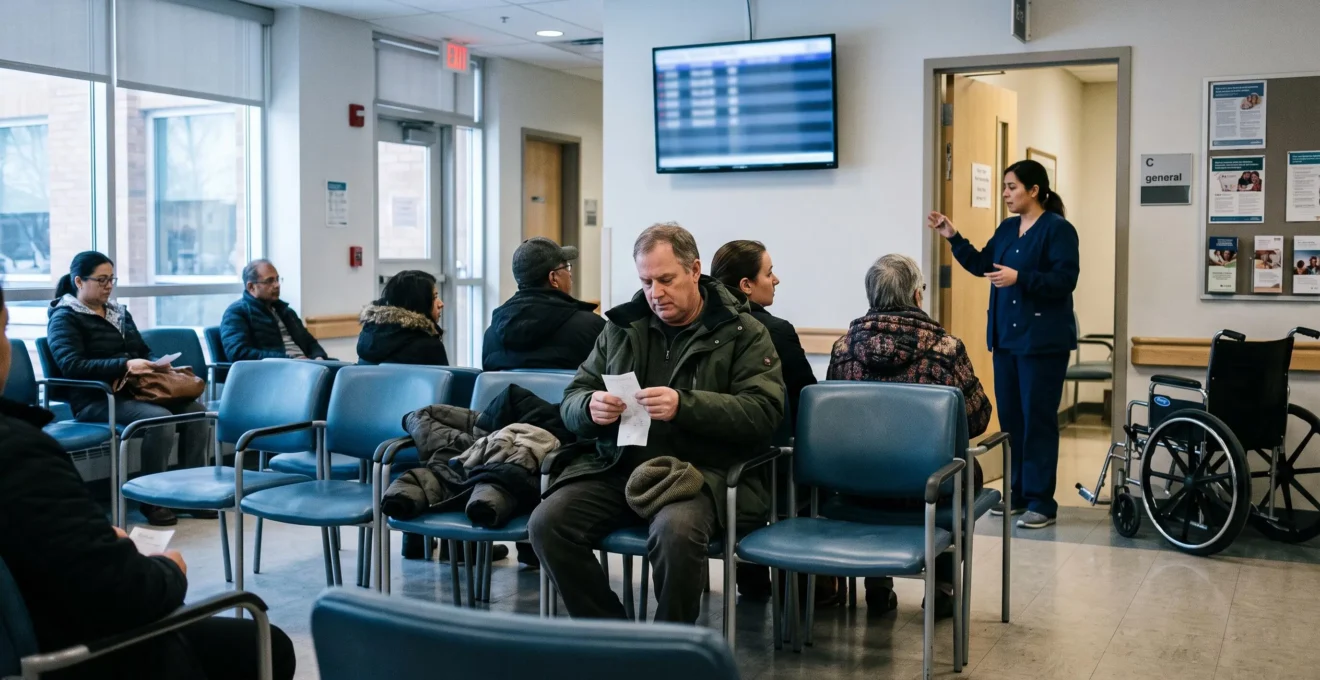
Getting a medical appointment in Canada can become complicated when a clinic stops taking new patients, a specialist has a waitlist of several months, or the nearest healthcare facility is several hours away. However, these challenges do not mean that all access options have been exhausted.
Depending on the province, the nature of the issue, and the level of urgency, several avenues can be considered: pharmacy consultations, primary care clinics, phone navigation services, virtual care, or having an existing referral reassessed.
The goal is not simply to secure a faster appointment, but to obtain appropriate care without losing vital medical information or delaying a necessary examination.
For both patients and caregivers, taking a structured approach helps demystify wait times, identify the right points of contact, and recognize when it is time to adjust strategies.
Easier Access to Care: Key Takeaways
- Compare published wait times with provincial indicators and report any changes in health status.
- Explore locally available primary care resources rather than relying on a single facility.
- Tailor the consultation format to symptom severity: certain situations require emergency evaluation without waiting for an appointment.
- Why do healthcare wait times vary so much from one region to another?
- How can you find alternative care options when your regular clinic is overwhelmed?
- In-person vs. virtual consultation: Which is right for your situation?
- What signs indicate that you should not wait for a routine appointment?
- When should you look for another option after a significant delay in care?
- How do you navigate the healthcare system when you need multiple types of care?
- Virtual care or an in-person visit: How do you choose?
- Which healthcare facility should you choose based on the nature and urgency of your issue?
Why do healthcare wait times vary so much from one region to another?
Healthcare wait times vary across Canada because available providers, population needs, and service organization differ by region. Provincial referral rules, hospital capacities, and community resources also impact wait times. Consequently, two patients with similar health concerns may experience very different journeys.
This disparity often begins well before a specialist referral. An individual with a regular primary care provider benefits from routine follow-up and better continuity for medical requests. In contrast, someone without a family doctor or designated nurse practitioner often must find an initial point of entry before even beginning their care pathway.
According to CIHI data on access to a regular healthcare provider, Canadian adults with access to a regular healthcare provider 83 % of Canadian adults reported having access to such a professional in 2024. This proportion varied across provinces and territories.
83%
of Canadian adults reported having a regular healthcare provider in 2024. This metric does not measure how quickly an appointment can be obtained and does not refer exclusively to family physicians.
Canadian Institute for Health Information, published October 23, 2025, 2024 data.
These disparities can also be explained by the geographic distribution of healthcare providers. Rural or remote areas may have fewer locally accessible specialists, requiring travel or bundled consultations during periodic specialist visits.
Provinces and territories administer their own publicly funded healthcare systems under the applicable Canadian framework. As a result, referral mechanisms, consultation networks, and access improvement programs are not necessarily identical.
It is also important to distinguish between two measurements:
- Published wait times: these correspond to a period defined by a specific benchmark, such as the time between a treatment decision and the actual procedure.
- The patient-experienced wait time: this often encompasses finding an initial provider, undergoing diagnostic testing, obtaining a specialist referral, and waiting for treatment.
A hospital statistic can therefore be accurate while capturing only a portion of the patient’s overall journey.
CIHI’s 2026 report on wait times in Canada highlights an overall increase in emergency department wait times between 2018–2019 and 2024–2025. It also identifies constraints related to hospital bed capacity and discharge options to other care settings.
To contextualize personal wait times, it is helpful to consult provincial dashboards, select the correct medical specialty, and verify the exact starting point of the measurement. When available, provider availability metrics can supplement this search.
A wait time that exceeds an average does not automatically indicate an error in care coordination. However, it does represent a valid reason to seek clarification regarding one’s referral and the available options.
How can you find alternative care options when your regular clinic is overwhelmed?
When a clinic or healthcare facility cannot offer an appointment, expanding your search to other primary care resources available within your province is advisable. Pharmacies, walk-in clinics, community healthcare teams, and navigation services can address certain needs based on their scope of practice and eligibility criteria.
The first step is to clarify the specific nature of the service required. A prescription renewal, a minor ailment, and a specialized examination do not necessarily fall under the scope of the same healthcare professionals.
Key options to consider include:
| Resource | Applicable Situations | Key Details to Verify |
|---|---|---|
| Pharmacy | Advice and assessment of specific minor ailments | Authorized scope of practice in the province |
| Walk-in clinic | Non-life-threatening issues requiring medical assessment | Availability, booking methods, and eligibility |
| Community health center | Primary care and support according to local programs | Catchment area and intake criteria |
| Provincial health navigation service | Guidance on care levels and appropriate resources | Contact number, hours of operation, and local services |
| Referring provider | Exploring alternative clinical teams or practice sites | Options for a new referral or transfer |
In Quebec, for instance, Info-Santé 811 allows residents to consult a nurse for non-urgent concerns. Option 3 connects callers to the Primary Care Access Point (GAP), designed for individuals without a family doctor.
The official Info-Santé 811 page from the Government of Quebec outlines the available services: nursing triage, psychosocial support, and orientation toward primary care options.
These specific access points apply to Quebec. In other provinces and territories, it is necessary to consult officially designated regional services rather than assuming 811 operates identically everywhere.
To conduct an efficient search, ask targeted questions: Does the clinic evaluate this specific condition? Are they accepting new patients? Do they offer virtual consultations? Is a referral required?
Document the answers received alongside the date of the call. This prevents repetitive efforts and provides clear information to any professional coordinating your care.
Do not assume that joining multiple waitlists is permitted or beneficial; regional rules may enforce centralized registries or specific protocols. Likewise, documenting a refusal of service does not automatically confer expedited priority.
In remote areas, inquire about visiting clinical teams, mobile clinics, or regional virtual care networks. Availability and eligibility criteria should always be confirmed locally.
The hospital emergency department should not become an automatic workaround for a lack of clinic appointments. However, worsening conditions or signs of serious illness warrant an immediate reassessment of the required level of care.
In-person vs. virtual consultation: Which is right for your situation?
Virtual care is primarily appropriate when a clinician can reliably evaluate the issue without performing a hands-on physical exam. It can facilitate chronic disease management, review of lab or imaging results, and medication adjustments. An in-person consultation remains preferable whenever a diagnosis relies on physical assessment, direct observation, or specialized diagnostic equipment.
The decision depends primarily on the clinical question to be addressed, rather than travel time alone.
For a patient receiving routine care, a virtual appointment with a provider familiar with their medical history can offer seamless continuity. The patient can report changes in symptoms, share home health readings, and adjust treatment plans.
Conversely, new onset abdominal pain, an injury requiring physical examination, or an issue requiring palpation make a virtual consultation inadequate. In these scenarios, the clinician will likely recommend an in-person visit or an urgent evaluation depending on the symptoms.
Virtual consultations do not necessarily preclude the prescription of medications or lab requisitions. However, these capabilities depend on clinical judgment, professional licensing standards, and regionally available services.
Practical Considerations Before Booking
Several practical elements influence whether a virtual visit is suitable:
- Is the service covered by the provincial health plan or offered through a private, fee-for-service platform?
- Can the practitioner issue prescriptions or diagnostic requisitions if needed?
- Does the patient have access to a reliable internet connection and a private, quiet space?
- Is language or technical assistance required to communicate effectively?
Communication efficacy must also be factored in. Patients facing hearing, cognitive, or digital literacy barriers may require additional in-person support.
A blended approach can sometimes be effective: conducting an initial virtual visit to discuss symptoms and order prerequisite tests, followed by an in-person evaluation if clinically indicated.
However, this two-step process does not always save time. It can introduce an unnecessary extra step when the need for a physical examination is evident from the outset.
If symptoms persist, worsen, or remain unexplained following a virtual consultation, adhere to the provider’s reassessment guidance and do not assume the remote visit was fully definitive.
What signs indicate that you should not wait for a routine appointment?
Severe chest pain, acute shortness of breath, sudden symptoms of a stroke, uncontrollable bleeding, or loss of consciousness require immediate medical intervention. In Canada, call 911 for any suspected life-threatening emergency. In other cases, an acceptable waiting period depends largely on the severity and progression of symptoms.
It is helpful to distinguish between three levels of response without attempting to self-diagnose.
| Level | Illustrative Examples | Appropriate Action |
|---|---|---|
| Possible life-threatening emergency | Respiratory distress, severe chest pain, sudden signs of stroke, loss of consciousness | Call 911 |
| Urgent assessment needed | Concerning symptoms without immediate vital signs instability, worsening pain, potential severe infection | Seek prompt evaluation through an urgent care center or emergency department |
| Minor and stable issue | Mild symptoms without warning signs | Pharmacy, primary care clinic, or routine appointment |
This table provides general orientation rather than a diagnostic framework. Individuals who are frail, immunocompromised, or managing serious underlying conditions may require rapid medical evaluation for symptoms that might seem minor in other patients.
Key warning signs of a stroke include the sudden onset of facial drooping, arm weakness, or slurred speech. Recognizing any of these symptoms warrants an immediate 911 call, even if the signs resolve quickly.
The sudden onset of a symptom, rapid clinical deterioration, or the co-occurrence of multiple red-flag signs are critical details to monitor.
Before deciding to wait for an appointment, three straightforward questions can help convey the situation accurately to a triage service:
- Did the issue begin suddenly, or is it deteriorating quickly?
- Does it interfere with normal breathing, consciousness, mobility, or everyday functioning?
- Are there pre-existing conditions, active treatments, or vulnerabilities that heighten clinical risk?
Do not delay calling 911 to answer these questions if an emergency sign is already present.
In Quebec, the Government of Quebec recommendations on using the emergency room distinguish between critical emergencies and non-urgent problems better suited for primary care resources. They also emphasize that patients are prioritized based on clinical acuity rather than arrival time.
Hesitation or fear of overburdening the system should never prevent someone from seeking care for an alarming symptom. Triage professionals are specifically trained to evaluate clinical risk.
When in doubt about a non-life-threatening situation, clinical navigation services can assist in determining the best next step based on regionally available resources.
When should you look for another option after a significant delay in care?
Exploring alternative options is justified when a patient’s health status changes during the waiting period, when the projected wait time appears incompatible with clinical needs, or when no clear updates can be obtained regarding the referral. There is no universal threshold after which every patient should switch facilities; priority depends entirely on the clinical issue and its evolution.
A request for a consultation or procedure may have been classified as non-urgent at a specific point in time. That clinical determination does not guarantee that the condition will remain unchanged over several weeks or months.
The primary point of contact is generally the healthcare professional who initiated the referral or diagnostic requisition. They can determine whether new clinical details justify an updated referral or a modified triage priority under applicable guidelines.
Three distinct scenarios should be recognized:
- Stable condition: Confirm receipt of the referral and obtain indicative timelines without initiating unnecessary duplicate requests.
- Evolving condition: Report emerging symptoms, functional decline, or increased pain levels to the responsible clinician.
- Rapidly deteriorating condition: Seek urgent clinical evaluation without waiting for the scheduled appointment, utilizing emergency services if indicated.
Comparing personal wait times with published provincial benchmarks can provide perspective, but it cannot substitute for a clinical provider’s judgment regarding the safety of an ongoing delay.
Five Steps to Reassess an Extended Wait Time
- Retrieve the initial referral: Note the date, referring provider, and specific service requested. Deliverable: an identifiable copy or record of the referral.
- Confirm receipt and status: Contact the receiving facility to verify that the referral is registered in their system. Deliverable: a dated log of the confirmation.
- Document changes in condition: Record new symptoms, their frequency, and their impact on daily activities. Deliverable: a chronological symptom log to present to your clinician.
- Request a clinical review: Contact the referring provider to evaluate whether medical priority should be upgraded. Deliverable: documented instructions and any updated paperwork submitted.
- Explore alternative access routes: Inquire whether another facility or a second opinion is viable. Deliverable: a list of verified options and their specific referral criteria.
Certain jurisdictions operate centralized intake or pooled waitlist systems, particularly for scheduled elective surgeries. Patients can ask whether other surgical teams or hospitals participate in the same pool, without assuming that a transfer is automatically available.
If challenges persist, hospital patient relations departments, ombudsman offices, or provincial advocacy bodies can outline applicable recourse mechanisms. Their mandates and authority differ across jurisdictions.
Private clinics and out-of-province medical options require careful due diligence. Confirm upfront out-of-pocket costs, provincial reimbursement eligibility, referral prerequisites, and how post-procedure follow-up care will be coordinated.
The deciding factor remains the patient’s medical condition. Even when an alternative pathway appears available, it must support comprehensive care and ensure complete medical records transfer.
How do you navigate the healthcare system when you need multiple types of care?
When a patient requires multiple consultations, diagnostic exams, or specialized treatments, designating a coordinating clinician and keeping an up-to-date personal medical record is invaluable. This organized approach helps track active referrals, anticipate prerequisite tests, and prevent communication gaps across healthcare facilities. A family caregiver can assist with this coordination with the patient’s consent.
The primary difficulty often stems from the sequence of required steps. A specialist consultation may depend on specific laboratory findings, imaging, or collateral opinions. If these prerequisites are identified too late, the overall timeline can be significantly prolonged.
A practical method involves creating a personal care tracking table:
| Planned Care | Prerequisite Step | Follow-Up Action |
|---|---|---|
| Specialist consultation | Medical referral | Confirm receipt of the referral by the clinic |
| Diagnostic exam | Requisition or order | Verify testing location and preparation requirements |
| Follow-up appointment | Results available | Ensure the consulting provider has direct access to results |
This example demonstrates an organizational framework rather than a mandatory procedure enforced across all provinces.
A personal health binder or digital file should contain facility contact numbers, a current medication list, pending referrals, diagnostic reports, and upcoming appointments. Sensitive medical documents must always be stored and transmitted securely.
It is equally important to map dependencies between appointments. If a specialist requires specific imaging before determining a treatment plan, clarify when those results will be finalized, avoiding unauthorized or duplicate imaging requests.
Multidisciplinary healthcare teams can streamline navigation when available. Depending on the patient’s condition, a primary care team, chronic disease clinic, or specialized hospital service may bring several disciplines under one coordinated umbrella.
For complex journeys, medical social workers, nurse navigators, or patient liaison coordinators can assist in clarifying available services and facilitating institutional communication.
However, these support roles are not universally deployed across all patient populations. Inquire whether navigation support exists for the specific condition within your local health authority.
A well-maintained personal file does not replace formal clinical coordination, but it empowers patients to quickly spot an overlooked referral, a missing lab report, or an unscheduled milestone.
Virtual care or an in-person visit: How do you choose?
To decide between virtual care and an in-person visit, three straightforward questions can guide the initial choice: Is a physical examination likely required? Are new prescriptions or diagnostic requisitions needed? Can the symptoms be described and evaluated reliably from a distance? If any uncertainty remains, a triage provider should determine the most appropriate setting.
This decision-making framework moves beyond convenience as the sole consideration.
Three Questions to Guide Your Decision
- Is a physical examination essential? If the issue involves palpating a painful area, auscultation, or evaluating a physical wound, prioritize an in-person appointment or request triage guidance.
- Is a prescription or diagnostic requisition needed? Verify whether the remote provider is authorized to conduct the required assessment and issue valid requisitions in your province.
- Can the consultation be conducted reliably online? Ensure there is a stable connection, adequate privacy, and clear communication regarding symptoms and history.
An unfavorable answer does not always mean virtual care is entirely out of the question; it simply means verification with the service provider is needed before booking.
For routine monitoring of a stable condition, virtual care offers tangible benefits: reduced travel, convenient access to your regular clinician, and the ability to review diagnostic results from home.
For individuals residing far from specialized medical centers, it can also minimize costly commutes. However, its value hinges on whether the remote setting can deliver clinical care that aligns with medical requirements.
Financial costs must also be weighed. A virtual consultation covered by the public healthcare system differs significantly from an out-of-pocket commercial telehealth platform. Coverage, service fees, and billing policies should always be verified with the provincial health plan and provider beforehand.
Weighing the Cost of an Inconclusive Visit
A critical question to ask is: If the virtual visit proves inconclusive, will you face another prolonged wait for an in-person appointment?
When the likelihood of having to restart the care process is high, booking an in-person visit from the start is often the more prudent approach.
Conversely, traveling long distances for administrative follow-ups or discussions that do not require physical assessment introduces avoidable travel expenses and lost time.
The ideal consultation format is one that delivers an adequate clinical assessment and a workable follow-up plan, rather than simply whichever appointment appears earliest on the calendar.
Key Considerations Before Choosing a Care Facility
- First establish the clinical urgency and the need for physical examination before selecting a consultation setting.
- Verify that the facility handles your specific concern and that its intake criteria match your medical profile.
- Prepare relevant medical records and identify an alternative backup option to avoid restarting the process if appointments are unavailable.
Which healthcare facility should you choose based on the nature and urgency of your issue?
Selecting the appropriate healthcare facility depends primarily on symptom severity, the clinical skills required, and the resources available within your region. A pharmacy can evaluate certain minor conditions, a primary care clinic can manage non-life-threatening medical issues, and hospital emergency departments handle critical emergencies. If a life-threatening emergency is suspected, dial 911 immediately.
The selection must also account for continuity of care. A patient with a stable chronic illness benefits most from an ongoing relationship with their regular provider, whereas an acute, concerning symptom may necessitate prompt evaluation in an urgent care setting.
The following table summarizes the primary points of access.
| Clinical Need | Potential Entry Point | Key Decision Factor |
|---|---|---|
| Minor ailment | Pharmacy or primary care | Authorized scope of practice and absence of red flags |
| Issue needing prompt assessment | Walk-in clinic or urgent care center | Acuity, safe clinical timeframe, and available services |
| Chronic disease follow-up | Regular provider or primary care team | Continuity of medical records and need for routine monitoring |
| Complex health and social needs | Multidisciplinary team or community health center | Available integrated services and eligibility criteria |
| Severe or potentially life-threatening event | Emergency department (call 911 if needed) | Immediate risk to health or safety |
Hospital emergency departments operate on triage acuity protocols. Patients with the most critical conditions are seen ahead of those who arrived earlier with less urgent symptoms.
This is why turning to an emergency department merely to bypass clinic wait times is often counterproductive. Opting for a suitable primary care setting is generally far more effective when red-flag symptoms are absent.
Administrative prerequisites must also be confirmed. Prior to attending an appointment, ensure your provincial health insurance card is valid, and verify insurance coverage and any potential out-of-pocket fees.
In Canada, publicly covered services vary across jurisdictions. Fees may apply to ground ambulance transport, dental procedures, or optometry services depending on the province, patient age, social assistance status, and dedicated public programs.
For newcomers, Indigenous communities, and individuals facing language barriers, real-world accessibility also depends on the availability of culturally safe and linguistically accessible care. Inquire in advance whether translation, community advocacy, or cultural navigation services are provided.
In practice, simple preparation streamlines access: identify local health centers, maintain a directory of contact details and operating hours, and understand local appointment booking procedures. Family caregivers can assist with these arrangements with the patient’s authorization.
The next step is to pinpoint an accessible healthcare facility aligned with your present needs and verify its intake requirements directly. If your clinical condition shifts while seeking care, your triage priority must be reassessed immediately rather than waiting for an existing appointment date.
Can you receive healthcare in Canada without a family doctor?
Yes. Depending on the province, individuals without a family physician can access walk-in clinics, provincial navigation lines, pharmacist consultations, or community health organizations. In Quebec, the Primary Care Access Point (GAP) is specifically designed for unattached patients. Local intake criteria and appointment availability should always be confirmed directly.
Does a medical referral guarantee a specialist consultation within a specific timeframe?
No. A referral initiates a consultation request, but wait times depend on the specialty, clinical triage priority, and facility capacity. It is recommended to confirm that the receiving department has registered the referral and ask how to report any worsening of symptoms while waiting.
Can you receive medical care in another Canadian province?
Receiving medical care outside your home province is possible, but reimbursement depends on the nature of the service, provincial health insurance regulations, and interprovincial reciprocal agreements. Before traveling for planned non-emergency medical care, verify whether prior authorization is mandatory, what out-of-pocket costs may apply, and how follow-up will be arranged.
What should you do if a clinic refuses to take new patients?
Clarify whether the refusal applies to all episodic services or solely to long-term patient rostering. You may still be able to obtain a single walk-in consultation, a referral to another clinical team, or access through a provincial centralized queue. Keep detailed records of your contacts and consult official provincial directories to locate available providers in your region.
How can you help an older family member get the care they need?
With their consent, assist in assembling a current medication list, symptom log, appointment schedule, and healthcare provider directory. Address any mobility, transportation, communication, or digital hurdles. If multiple providers are involved, ask the primary clinician to oversee overall care coordination. If symptoms worsen or emergency signs appear, seek immediate medical evaluation.